

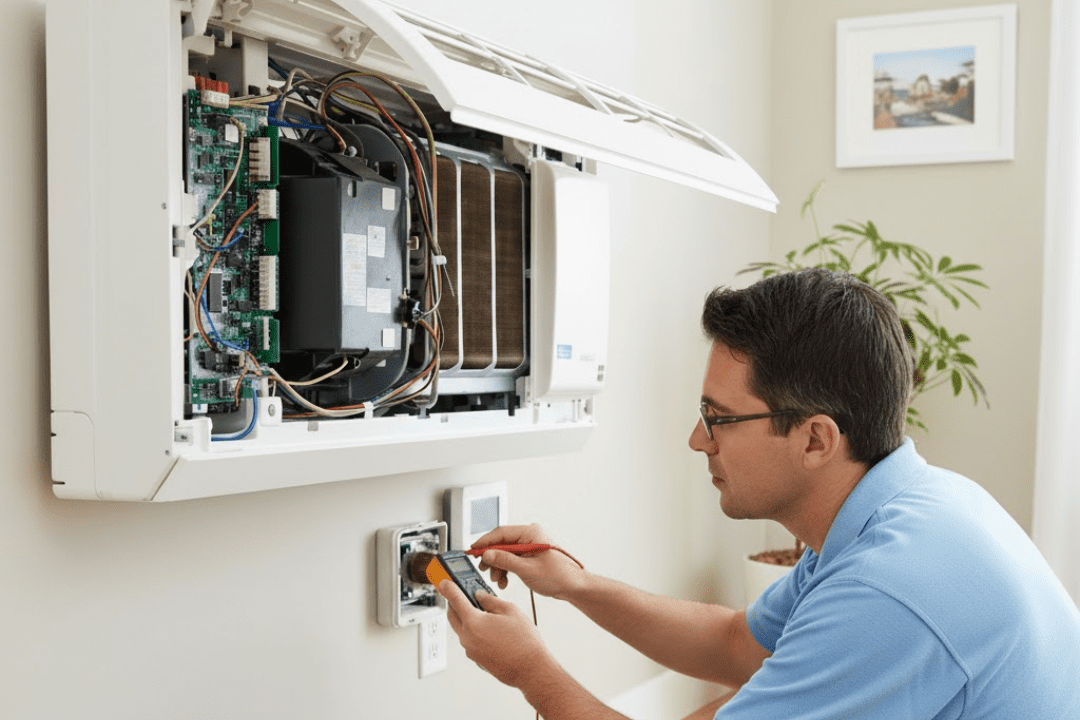
A home should feel comfortably cool once the thermostat reaches its chosen setting, but that is not always the case. Some systems hit the number on the wall and still leave rooms feeling warm, sticky, or uneven soon afterward. In other homes, the unit cycles off, then turns back on too quickly because the comfort never truly holds. This can be frustrating because it makes homeowners wonder whether the thermostat is wrong or the air conditioner is no longer doing its job well. AC repair matters because it helps uncover the hidden reason why cooling performance falls short after the indoor set point is reached.
When Cooling Stops Holding
- Reaching the Number Does Not Always Mean the Home Is Comfortable
A thermostat can only measure temperature in one location, which contributes to the problem when a cooling system struggles to reach the set point. The hallway or main living area where the thermostat is mounted may cool down first, while bedrooms, upper rooms, and sun-exposed spaces continue holding heat. When the system shuts off based on that single reading, the rest of the house may still feel uncomfortable. This makes the cooling system seem unreliable, even though it technically met the targer. AC repair matters because a service check can reveal whether the issue is tied to poor airflow, weak circulation, thermostat placement, or uneven cooling delivery across the home. Without that review, homeowners may keep lowering the setting, forcing the unit to work harder without addressing the real cause. A home should feel steadily cooled, not briefly cooled in one zone and warm again shortly thereafter.
- Repair Helps Find Why Cooling Falls Off After the Cycle Ends
When comfort drops soon after the thermostat reaches the set point, the issue often indicates hidden performance loss within the system. The air conditioner may be cooling just well enough to satisfy the thermostat, but not enough to remove stored heat from the rest of the house, leaving it uncomfortable after the cycle ends. Dirty evaporator coils, weak blower performance, clogged filters, duct leakage, and low refrigerant can all reduce the system’s ability to cool the entire living area. Homeowners searching for Air Conditioning Repair in Celina may notice this exact pattern: rooms warm back up too quickly after the unit shuts off. This kind of problem matters because the system may appear functional while quietly losing the ability to support stable indoor comfort. Repair helps identify whether the unit is underperforming during each cooling cycle and whether the home is receiving enough cooled air to remain comfortable after the thermostat is satisfied.
- Humidity Can Make the Home Feel Warm Even at the Right Temperature
Another reason AC repair matters is that indoor comfort depends on both moisture control and temperature. A home can technically reach the thermostat setting and still feel uncomfortable if the air conditioner is not removing humidity effectively. When that happens, the space may feel clammy, heavy, or slightly warm even though the display shows the desired number. This is common in systems that short cycle, have airflow problems, or are losing cooling efficiency. The air conditioner may cool the thermostat area quickly, then shut off before enough humidity is removed from the rest of the house. As a result, the temperature reading looks fine, but the home still does not feel settled. Repair can help determine whether the system is cycling too briefly, struggling with airflow, or losing moisture-removal performance because of internal wear. That is important because homeowners often blame the thermostat when the real discomfort comes from an AC system that is no longer balancing cooling and dehumidification the way it should.
- Longer-Term Strain Can Grow Even When the Unit Still Turns On
A cooling system that struggles after reaching the set point is often operating under more strain than homeowners realize. Because comfort does not last, the thermostat may call for cooling again sooner than expected, causing the system to cycle more often throughout the day. That repeated cycling can place extra pressure on motors, capacitors, contactors, and compressors. Even though the AC still turns on and off, it may be wearing itself down faster because it cannot maintain stable conditions between cycles. AC repair matters here because it addresses the weakness before the pattern leads to a bigger breakdown during hotter weather. If the issue is ignored, the unit may continue wasting energy while providing less dependable comfort. A repair visit can help determine whether the system is losing cooling due to airflow restriction, component wear, refrigerant issues, or duct-related issues. Solving that problem early helps restore steadier operation and reduces the stress caused by repeated short recovery cycles.
- Repair Supports More Even Cooling Across the Whole House
Homes rarely cool evenly, and small imbalances become much more noticeable when the AC starts struggling after the set point is reached. One room may stay comfortable while another feels warm again within minutes. Upper floors may drift upward in temperature, or rooms with afternoon sun may never seem to stay cool for long. AC repair helps by checking how the system distributes air and whether the cooled air is actually reaching the areas that need it most. A technician may find blocked vents, leaky ducts, weak blower output, or poor return-air movement that causes uneven cooling after the cycle ends. This matters because the thermostat can only respond to the temperature near it, not the comfort level throughout the house. When airflow and system performance improve, cooling feels more evenly distributed from room to room rather than fading quickly, especially in spaces that already struggle with heat gain.
AC repair matters when a cooling system struggles to reach the set point because real comfort involves more than a number on the wall. If the home warms up too quickly, feels sticky, or cools unevenly, the system may be losing performance in ways that the thermostat alone cannot reveal. Repair helps identify airflow issues, humidity problems, insufficient cooling capacity, and repeated cycling that make it hard to maintain comfort. By correcting those problems, homeowners can restore steadier indoor conditions and reduce strain on the equipment. A properly functioning system should hold comfort, not lose it moments after reaching the target.
