

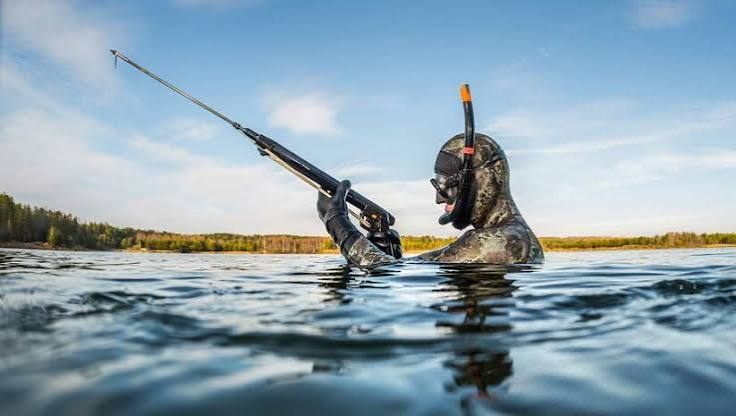
While carrying out a dive last summer, a large Snapper was lost due to the spear gun band snapping in the middle of the shot. At first it was thought that the band must have worn out, but after further inspection it was found to have simply been neglected. The band had been left in the angler’s gear bag for 3 months and had dried out. A fine crack had also appeared along the edge of the band and on the shot it had ended up snapping at the worst possible time. The angler knew immediately upon surfacing that he had lost his fish.
In order to go salt water diving with a spear gun and use it effectively and safely all of your gear must be serviced, maintained and stored properly. This subject matter is of little interest to most people but for those out there who are very interested in the subject of material deterioration and the physical changes that occur to said materials as they deteriorate over time this information will be very useful.
What actually breaks down (and when)
Most pieces of spearfishing equipment have a failure time or window in which they are most prone to failure. Knowing approximately when a piece of gear is likely to fail can help you prepare for your dive, in much the same way as reading the tide charts for expected changes in the tide. Below is a rough guide to the failure time of various pieces of spearfishing gear.
| Component | Common issue | When to check |
| Bands | Cracking, stretching, loss of power | Before every dive |
| Shaft | Bending, tip wear, barb damage | After every dive |
| Trigger mechanism | Stiffness, corrosion, misfiring | Monthly, or after rocky dives |
| Wishbones | Fraying, snapping at the notch | Before every dive |
| Barrel/body | Warping, UV damage (for wood) | Every few months |
Bands and wishbones are the most mechanically stressed parts of a speargun. The bands in particular are made of latex and therefore do not last forever, even the best spear guns will eventually require the bands to be replaced. This part of the spear gun stores a large amount of energy as it is shot and then releases this energy upon firing. The energy stored in the bands is then released in the corrosive saltwater environment of the ocean. It is only natural that the bands will eventually fail.
Clean Your Speargun After Each Dive!
Saltwater is notorious for its affect on gear left in the open for long periods of time. The slow working of the salt into every nook and cranny can have tragic results. To prevent this from happening, every piece of gear needs to be given a good rinse with FRESHWATER after each use. This needs to be done in a manner that ensures that all parts of the gear are cleaned. The trigger mechanism of the speargun needs to be pulled several times to flush the mechanism of any debris. The barrel of the speargun needs to be wiped down with a soft cloth to remove any salt or dirt from the surface of the barrel. Bands need to be gently dunked in the water and then squeezed to allow the water to fill the latex of the band.
I know that all of this is pretty obvious stuff but it is not common practice for some reason. Rinse all of your gear off every time you take it out of the water and make sure to pull the trigger a few times and wipe down the barrel with a dry cloth. Rinse all of your gear off after every dive and store it in a dry gear bag. Do not take your gear out of the bag and wipe it off with a few times and then store it in the bag. The water will wicked up into the gear within a few hours and start to corrode everything. Even a couple of hours in a warm humid airless bag can cause serious damage. I just figured this out for myself after realizing that my trigger was corroded. I had been storing my gear in the bag while it was still damp and then storing it in a warm humid airless space. All of the obvious problems and it took me this long to figure it out.
Bands deserve a whole conversation
Latex deteriorates whether a band is in use or not. All exposure to UV light, atmospheric ozone, heat and aging cause deterioration of the latex at the molecular level. This can result in a band failing on the first shot of the season, without any visible sign of wear prior to that shot.
Check them by stretching gently and looking for:
- Small surface cracks running perpendicular to the stretch direction
- Discoloration or a chalky, almost dusty texture on the outer surface
- Visible thinning near the wishbone connection points
- A feeling of reduced elasticity compared to a fresh band, that sluggish, reluctant stretch
Cracks, cuts and other surface marks can develop on the latex as it is aging. These need to be inspected for prior to use. Any cracks, cuts or other surface damage can lead to premature failure. Inspect each band for such marks prior to use. Even the slightest crack can lead to spear gun failure. It is far better to spend a few dollars replacing a band than risking losing a large fish due to a snapped band.
Shafts and triggers: the components people forget
Spear shafts are also subject to damage from rocks, fish and even the bottom of the ocean. Most shafts will bend at some stage and in most cases this does not seem to cause any problems. However, the bend can affect the flight of the spear when shot underwater. Check you spear after each dive for any signs of bend. Also check the tips for wear, especially the barb. The tips can be re-pointed with a flat file in about 30 seconds.
Trigger mechanisms must also be kept and require maintenance. See to it that the trigger mechanism is always clean and is lightly lubricated with good quality silicone lubricant. Never use petroleum based products on rubber seals and O-rings as they will quickly attack and fail silently, no better than saltwater. If the trigger feels gritty or is stiff/inconsistent when cycled dry at home then it won’t get better underwater, so fix it before you go.
Storage is half the battle
- Always store bands relaxed, not under tension. Stretched latex fatigues faster than resting latex, full stop.
- Keep gear away from direct sunlight and heat sources, both of which accelerate UV and oxidative breakdown.
- Hang spearguns horizontally or store flat to prevent shaft warping over time.
- Let everything dry completely before sealing it inside a bag or case.
Storage of gear after a dive is also very important for their longevity. If spearguns are not completely dry before they are put in bags they will rapidly begin to corrode. This will happen in warm and humid environments and the conditions will be airless (no air can escape from a bag). There is no better place for damp speargun gear to be than a gear bag! The gear will remain wet for weeks, corroding slowly but surely, and deteriorating.
(Unfortunately for me the triggers of my spearguns have deteriorated within a few months of purchase in the past. Always upon investigation I found that the part which had corroded was exposed to water for longer than necessary. This had happened because the guns were put into their gear bags while still damp. This situation only requires a change in behavior to be avoided – the gear bags are to be stored in a cool, dry, well ventilated storage area until all gear has fully dried. Then the gear bags can be filled with the gear as normal and stored as required. The drying process should take a few days in normal garage storage conditions.
The honest takeaway
However, the loss of this particular fish was entirely preventable. The bands of the speargun had visible surface cracks and wear on the latex near the connection of the bands to the wishbones. This would have taken seconds to inspect and to rectify prior to use. It highlights a lack of appreciation for the simple things in life.
By now I am quite used to the whole process of gear maintenance and must admit that it does not really excite me. My experience with the gear so far has been very good indeed and I am confident that by carrying out these simple maintenance routines on a regular basis I will be very satisfied with my gear and able to land more fish. The daily routine of rinsing, lubricating, stretching, storing and checking for wear, and making repairs as necessary, is the bulk of most days and is characteristic of modern life. It is not really that exciting and I shall not be carrying on with this. However, I am confident that in the long run it will all be worth while. For every session of spearfishing that I have been on so far, everything has worked perfectly. The shaft has flown straight, the band has loaded perfectly, the trigger has worked smoothly and I have been able to get in close to my fish without any problems. The gear has performed very well indeed and I am confident that with proper maintenance it will continue to do so.
